





With the advent of the Industry 4.0 era, the global automotive manufacturing industry is undergoing a profound transformation.
The traditional production model, which relied on manual labor and fixed assembly lines, is gradually being replaced by intelligent and digitalized production methods.
As the core carrier for the application of Industry 4.0 technologies, smart factories have become the key for automotive enterprises to achieve transformation and upgrading and enhance core competitiveness, making automobile production more efficient, precise, and flexible.
In the past, traditional automotive factories faced numerous challenges: rigid production lines that struggled to meet diverse consumer customization demands; frequent equipment failures that were only addressed after breakdowns, causing production downtime and rising costs; and high reliance on manual operations, which not only limited efficiency but also led to assembly errors that compromised product quality.
Smart factories under the Industry 4.0 framework precisely solve these pain points, enabling automotive manufacturing to leap from "manufacturing" to "intelligent manufacturing".
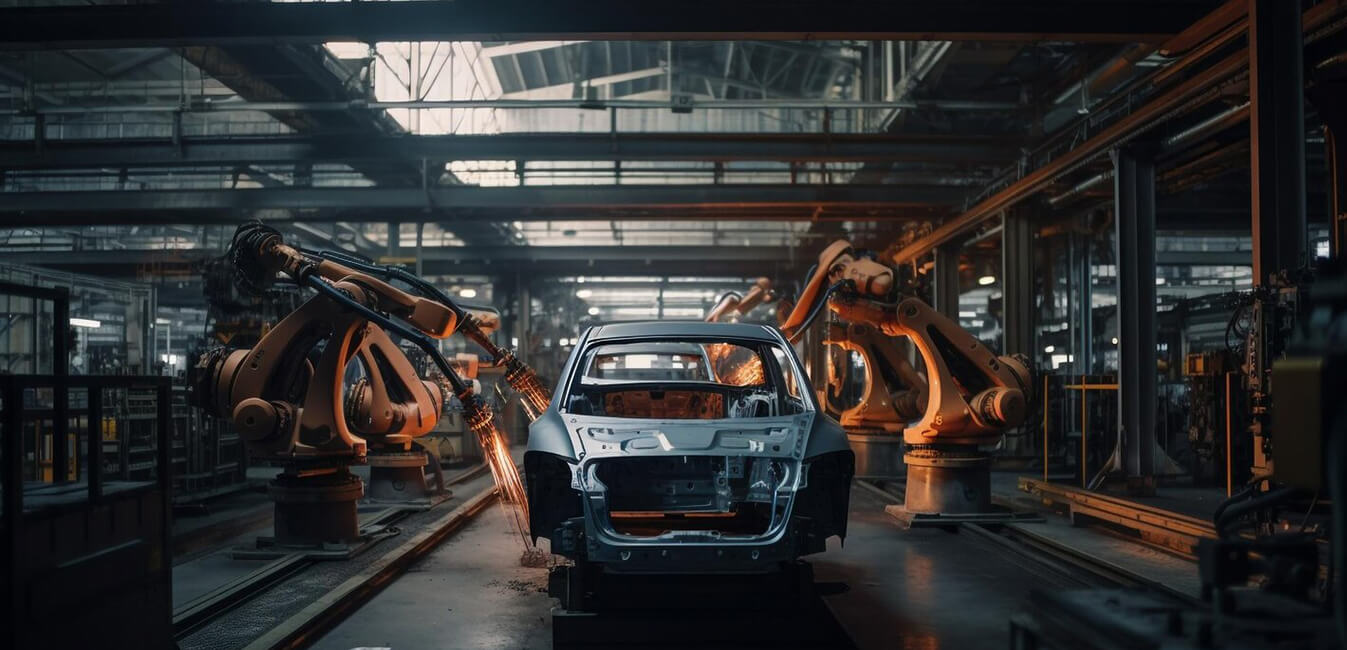
Inside production workshops, intelligent robots accurately perform complex processes such as welding, assembly, and painting with precision far exceeding human labor, while operating 24/7 to greatly boost productivity.
Sensors collect real-time equipment operation data, and AI systems predict potential failures in advance, arranging maintenance before problems occur to avoid production interruptions.
Today, many domestic automotive enterprises have taken the lead in deploying smart factories and built distinctive "benchmarks for intelligent production".
With over 280 intelligent guided vehicles and robots collaborating, more than 20 vehicle models can be produced simultaneously, with assembly precision reaching an impressive 0.1 mm.
A lifelong digital profile is created for each vehicle, enabling full-process traceability from production to after-sales service.
Li Auto’s Changzhou base has achieved fully unmanned operations from vehicle completion, charging, to warehousing and delivery.
Vehicles independently plan routes, complete energy replenishment and parking through intelligent driving technology, truly realizing the futuristic scenario of a "lights-out factory".
Furthermore, smart factories help automotive enterprises reduce costs and waste.
AI quality inspection systems detect product defects in real time, cutting rework costs.
Energy management systems precisely control production energy consumption, enabling green production.
Statistics show that after smart factory upgrading, the failure rate of automotive production lines can be reduced by 40%, order delivery cycles shortened by 25%, and production energy consumption per vehicle significantly decreased.